Security Window Film in St. Augustine: What It Does (and What It Doesn't)
Every few months I get a call that goes something like this: "I saw something about security window film online — is it really bulletproof?" The answer is no, and I'd rather have that honest conversation upfront than oversell something. But here's what security film actually does, and for St. Augustine homeowners on the coast, it's genuinely worth understanding.
How Security Window Film Actually Works
Glass doesn't become less breakable with window film on it. What changes is what happens after it breaks. Security film is a thick polyester film — much heavier than standard solar or decorative film — that bonds to the glass and holds the fragments together when the pane shatters. Instead of glass exploding inward or outward in sharp shards, the broken pieces stay attached to the film layer, which remains largely in place.
Think of it like laminated windshield glass in your car. When a rock hits it, the glass cracks but doesn't collapse. This one property — holding glass in place after impact — is what makes safety and security window film valuable in several distinct real-world scenarios.
What Security Film Protects Against
Storm Debris and Hurricane Season
Northeast Florida gets tropical storms and the outer bands of hurricanes regularly. We're not Miami, but we're not immune either. The glass breakage risk during a storm usually isn't sustained wind pressure — it's wind-driven debris. A palm frond moving at 60 mph can crack a standard residential window. When glass breaks without film, you've got immediate water intrusion, pressure changes inside the structure, and a hazardous environment.
With security film properly installed and anchored to the frame, the glass may crack but the film holds the pane together. This slows water intrusion and keeps the opening partially intact until conditions improve. The National Hurricane Center documents this region's storm history in detail — NE Florida has seen significant tropical activity across recent decades, and the case for coastal preparedness only gets stronger over time.
Smash-and-Grab Burglaries
Most residential break-ins through glass are opportunistic and fast. A burglar smashing a window to reach through and unlock a door expects the whole thing to take seconds. Security film dramatically extends that time — instead of one clean break, they're fighting film that stretches and resists. Research shows that even a 60-second delay significantly reduces successful smash-and-grab attempts. Most opportunistic burglars move on rather than stay exposed in front of a window that isn't cooperating.
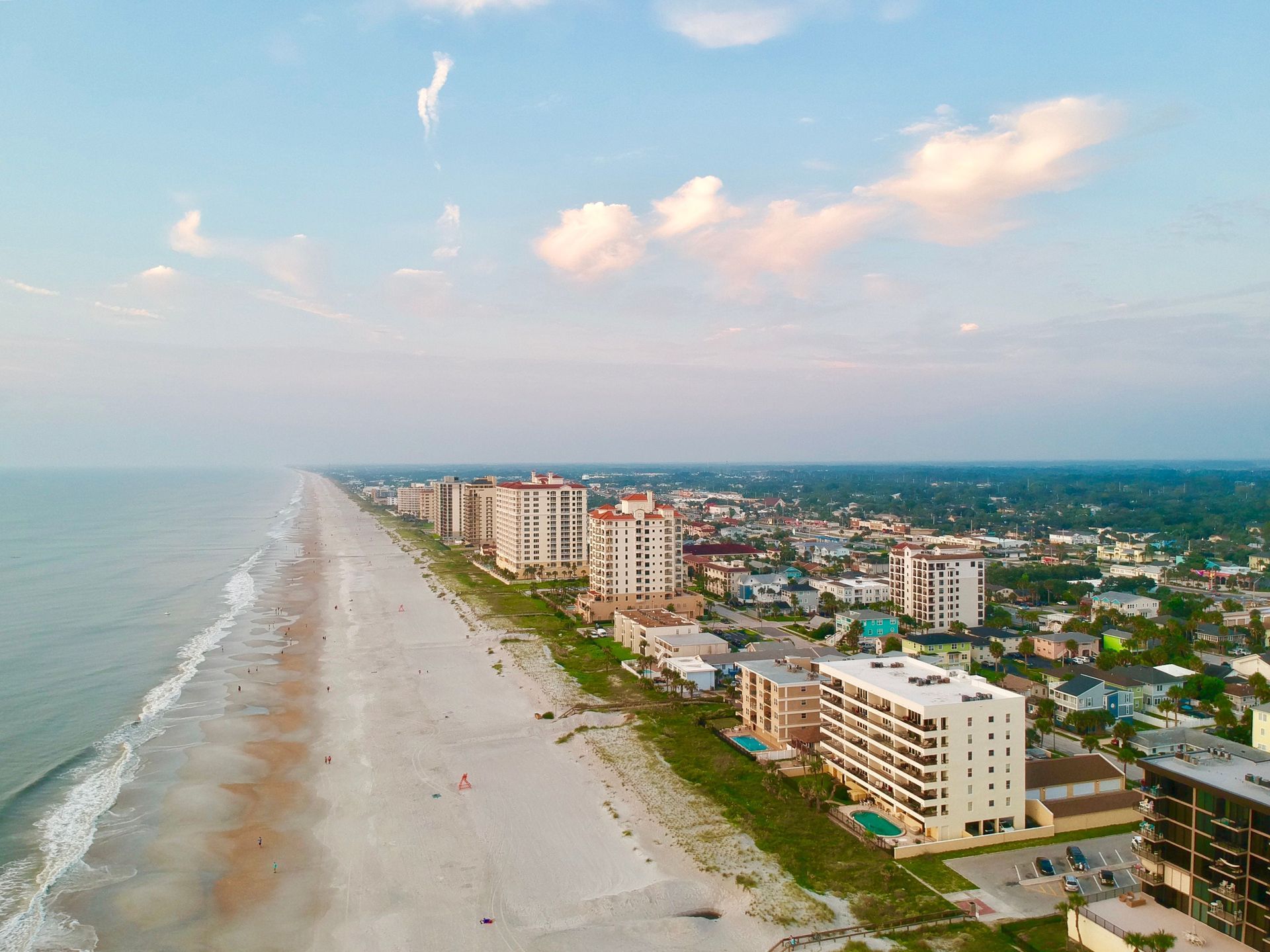
In St. Augustine's beach communities — Vilano Beach, Crescent Beach, properties along A1A — seasonal and vacation homes are particularly vulnerable. Security film is one of the most cost-effective deterrents available for properties that sit unoccupied for stretches of time.
Accidental Impacts
Kids, errant sports equipment, furniture that shifts against a window — accidents happen. Standard tempered glass shatters into hundreds of small pieces. With security film, those pieces stay attached to the film substrate. This matters in homes with young children and in any space where broken glass could injure occupants.
What Security Film Won't Do — Be Honest About This
A determined intruder with time and tools will get through security-filmed glass. It is not bulletproof. It won't stop a professional forced entry. What it does is slow down opportunistic attempts and dramatically reduce the danger and damage caused by broken glass — storm, burglary, or accident.
This is one layer of protection, not a complete solution. Combined with a monitored alarm system and good exterior lighting, it's very effective. On its own, it still provides meaningful benefit for storm protection and accidental breakage. Go in with accurate expectations and you'll be satisfied.
Thickness Options: 4 Mil, 8 Mil, and 12 Mil
4 mil film is entry-level safety film. It holds glass together after breakage and reduces injury risk. Good for homes with young children or anyone wanting basic protection against accidental breakage and minor impacts.
8 mil film is the most common choice for St. Augustine homeowners wanting real storm and security protection. It resists forced entry longer than 4 mil and provides meaningful storm debris protection. This is what I recommend for most residential security installs in our area.
12 mil film is heavy-duty, used in commercial applications, high-risk residential situations, and blast-mitigation scenarios. For most homeowners, 8 mil hits the right balance. Some customers on Anastasia Island or in Vilano Beach opt for 12 mil on their most exposed windows and 8 mil elsewhere.
Frame Anchoring: A Detail That Matters
Film bonded only to the glass doesn't perform nearly as well as film attached to the window frame itself. If the glass breaks and the film is only connected to the glass, the whole assembly can still push inward under pressure. When film is properly anchored to the frame with a mechanical attachment system, it holds everything together — dramatically improving both storm and security performance. For highest-risk installations, this is worth asking about specifically.
Cost Compared to Window Replacement
Impact-rated windows cost $800–$1,500 or more per window installed. Residential window film, including security grades, runs a fraction of that — typically $15–$25 per square foot installed depending on film thickness and job complexity. For a home with 15–20 windows, the difference is significant. Security film won't perform identically to true impact glass, but for homeowners who want meaningful storm and security protection without replacing every window in the house, it's the most cost-effective path available.
If you're curious whether security film makes sense for your home, I'm happy to walk through the specifics. We serve St. Augustine and the surrounding coastal communities — Ponte Vedra, Vilano Beach, Anastasia Island, Crescent Beach. The consultation is free, and I'll be straight with you about what the film will and won't do for your specific situation.
— Chuck Cochran, Co-Founder & Master Installer, North American Tint