Why Best Thermal Window Film Makes Your Home Comfortable Year-Round
The best thermal window film can reduce up to 78% of solar heat gain while blocking 99% of harmful UV rays, making it one of the most effective ways to control temperature and energy costs without replacing your windows.
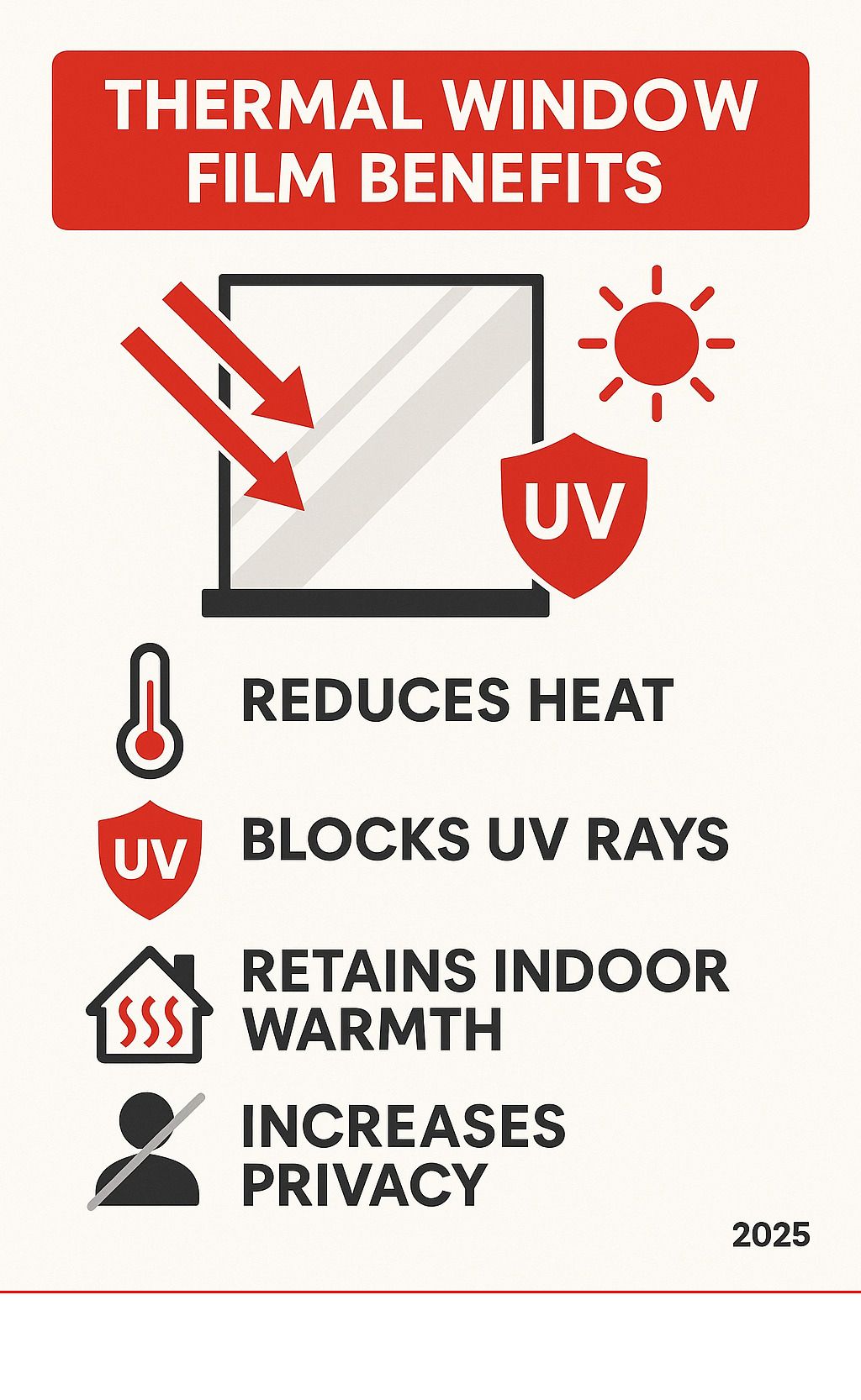
Top-performing thermal window films include:
- Nano-ceramic films – Block up to 97% of infrared heat with crystal-clear visibility
- Spectrally selective films – Cut heat by 60% while preserving natural light
- Low-E insulating films – Reflect indoor heat back during winter for year-round comfort
- Dual-reflective films – Combine privacy with 70% heat reduction
When summer heat makes certain rooms unbearable or winter cold seeps through your windows, thermal window film offers a solution that works invisibly. Unlike bulky blinds or curtains that block your view, quality thermal films let you enjoy natural light while creating comfortable living spaces.
The technology is impressive – these micro-thin polyester layers can make single-pane windows perform like double-pane glass. About 30% of your home’s heating and cooling energy escapes through windows, but the right film can dramatically reduce that loss.
Different film types serve different needs. Nano-ceramic films excel at heat rejection without affecting WiFi signals. Low-emissivity films work like invisible insulation for winter warmth. Spectrally selective films target specific wavelengths while maintaining clear views.
I’m Ian Noyes, and I’ve been helping homeowners choose the best thermal window film for their specific needs through North American Tint. My team and I work with premium 3M and Solar Gard films to ensure you get professional installation and long-lasting performance that actually delivers on the energy savings promises.
How Thermal Window Film Works & Why It Beats Blinds
The science behind thermal window film is actually pretty fascinating. When sunlight hits your regular window, about 76% of it enters your home and turns into heat – exactly what you don’t want during those sweltering summer months. But the best thermal window film uses advanced coatings to play defense against this heat invasion.
Here’s the clever part: sunlight isn’t just one thing. It’s a mix of visible light (what lets you see), ultraviolet rays (what fades your furniture), and infrared radiation (what makes your rooms uncomfortably hot). Quality thermal films act like a smart bouncer at the door – they let the good stuff (visible light) through while blocking the troublemakers (heat and UV rays).
This selective filtering is exactly why thermal films crush traditional blinds and curtains. Those old-school solutions block everything – heat, light, and your beautiful view. With thermal film, you get to keep your natural light and scenery while staying comfortable.
The Scientific research on window energy loss confirms what we see every day: window treatments can slash energy costs, but thermal films deliver results without the drawbacks of heavy window coverings.
Micro-thin Construction Explained
Modern thermal window films are honestly impressive pieces of engineering. We’re talking about polyester layers thinner than a human hair that somehow pack enough nanotechnology to reject up to 97% of infrared heat. The premium films we install use metal-free constructions with ceramic particles arranged in precise optical stacks.
Nano-ceramic films are the real standouts here. They maintain crystal-clear visibility while blocking serious heat. Unlike older metallized films that could mess with your cell phone reception, today’s ceramic technology is completely invisible to radio frequencies. Your WiFi, cellular, and GPS signals work perfectly through the film.
The multi-layer construction also means these films last. Quality thermal films resist scratching, fading, and peeling because the active layers are protected within the polyester matrix. This durability is why professional-grade films come with warranties stretching 10-15 years or longer.
Year-Round Benefits
What makes thermal window film truly worth it is how it works in every season . During summer, these films can cut your cooling costs by up to 30% by blocking solar heat gain. But here’s the part that surprises most homeowners – the same films that keep heat out in summer actually help retain warmth in winter.
Low-emissivity (Low-E) thermal films work like invisible insulation. They reflect your indoor heat back into the room instead of letting it escape through the glass. This means you’re not just solving a summer comfort problem – you’re improving your home’s energy efficiency all year long.
The UV protection is another huge win. By blocking up to 99% of harmful UV rays, thermal films prevent your furniture, artwork, and flooring from fading. This protection alone can save you thousands in replacement costs over the film’s lifetime.
Glare control is the bonus benefit that makes daily life more comfortable. No more squinting at your TV screen or struggling to work on your laptop near windows. Quality thermal films tame harsh glare while keeping your rooms bright and welcoming.
Choosing the Best Thermal Window Film : Key Criteria
Not all thermal films are created equal. When we help homeowners select the best thermal window film for their needs, we evaluate several key performance metrics that determine real-world effectiveness.
Visible Light Transmission (VLT) tells you how much natural light passes through. Higher VLT means brighter rooms but potentially less heat rejection. The sweet spot for most homes is 40-70% VLT, which maintains good visibility while providing substantial thermal control.
Total Solar Energy Rejection (TSER) measures the film’s ability to block heat. Premium films achieve 50-80% TSER, meaning they reject more than half of the sun’s total energy. This metric directly correlates to your cooling cost savings.
Emissivity matters for winter performance. Low-E films with emissivity ratings of 0.33 or lower act like thermal barriers, reflecting indoor heat back into your rooms. This can boost your windows’ insulation value significantly.
UV Rejection should be 99% or higher for any quality thermal film. This protects your furnishings and provides health benefits by blocking harmful radiation.
Warranty length indicates manufacturer confidence. Premium films typically offer 10-15 year warranties, while budget options might only provide 3-5 years. The warranty also affects resale value if you sell your home.
For more detailed information about performance benefits, check out our guide on solar film benefits.
Best Thermal Window Film for Summer Heat
For maximum summer cooling, look for films with high infrared rejection ratings. The best performers use nano-ceramic technology to block 90-97% of infrared radiation while maintaining clear views. These films excel at eliminating hot spots – those uncomfortable areas near windows where heat buildup makes rooms unusable during peak sun hours.
Spectrally selective films are particularly effective because they target the specific wavelengths that create heat while allowing beneficial visible light to pass through. This selective filtering means you can have a bright, naturally lit room that stays comfortable even during the hottest days.
Best Thermal Window Film for Winter Insulation
For cold-weather performance, low-emissivity films are the gold standard. These films use microscopic metallic layers to reflect indoor heat back into your rooms. The effect is like adding an invisible insulation layer to your windows.
Low-E films can reduce heat loss by 30-50%, which translates to noticeable comfort improvements and lower heating bills. They’re particularly effective at reducing cold spots near windows – those drafty areas that make rooms feel uncomfortable even when your thermostat is set properly.
Product Roundup: Thermal Window Films That Actually Deliver
After installing thermal films in hundreds of homes, I’ve seen which products consistently deliver on their promises. The best thermal window film options fall into four main categories, each designed for specific needs and performance goals.
The technology has come a long way in recent years. Modern nano-ceramic films can block up to 97% of infrared heat while staying completely clear. Spectrally selective films preserve natural light while cutting heat by 60% or more. Low-E films work like invisible insulation for winter warmth, and dual-reflective options combine privacy with serious cooling power.
| Film Type | Heat Rejection | VLT | Best For | Warranty |
|---|---|---|---|---|
| Nano-Ceramic | 80-97% | 40-70% | Maximum cooling | 12-15 years |
| Spectrally Selective | 60-75% | 60-80% | Natural light preservation | 10-12 years |
| Dual-Reflective | 70-85% | 15-35% | Privacy + cooling | 10-15 years |
| Low-E Insulating | 40-60% | 70-85% | Winter warmth retention | 10-12 years |
What makes these films special isn’t just the technology – it’s how they’re made. The premium films we install use multiple microscopic layers, each serving a specific purpose. Some reflect heat, others block UV rays, and still others provide durability and scratch resistance.
Nano-Ceramic All-Climate Film
These films represent the cutting edge of thermal technology. Using tiny ceramic particles instead of metals, they can block 97% of infrared radiation while maintaining crystal-clear views. Your windows look completely natural from both inside and outside.
The metal-free construction is a game-changer. Unlike older films that could interfere with cell phones or WiFi, nano-ceramic films are completely transparent to electronic signals. You get maximum heat rejection without any connectivity issues.
We’ve installed these throughout Florida, and the results speak for themselves. Homeowners consistently report immediate comfort improvements and noticeable drops in cooling costs. The neutral appearance means they work with any architectural style, from historic homes to modern designs.
Spectrally Selective Clear Film
For homes where natural light is a priority, these films offer the perfect balance. They use advanced optical coatings to target specific wavelengths – blocking the heat while letting beneficial visible light shine through.
With high VLT ratings of 60-80%, rooms stay bright and naturally lit while heat gain drops by 60% or more. It’s like having smart windows that know the difference between good light and bad heat.
The UV protection is museum-quality, blocking 99.9% of harmful radiation. This makes them ideal for protecting valuable artwork, antiques, or expensive furnishings. The film pays for itself by preventing fading damage alone.
Dual-Reflective Privacy Film
These films solve two problems at once – excessive heat and privacy concerns. The exterior has a mirror-like appearance during daylight hours, giving you one-way visibility while keeping prying eyes out.
Heat rejection is impressive at 70% or more, making these perfect for west-facing windows that get hammered by afternoon sun. The privacy benefit is substantial during daytime, though it reverses at night when interior lights are on.
We often recommend dual-reflective films for bedrooms, bathrooms, and home offices where privacy matters. The glare reduction is also significant, making them popular for rooms with large TVs or computer workstations.
Low-E Insulating Film
For year-round comfort, Low-E films are hard to beat. These use microscopic metallic layers to reflect indoor heat back into your rooms during winter while still providing summer cooling benefits.
The emissivity rating of 0.33 or lower means these films significantly boost your windows’ insulation value. It’s like upgrading from single-pane to double-pane windows without the massive expense of replacement.
Low-E films work particularly well in older homes with original windows. They can reduce heat loss by 30-50%, making rooms more comfortable and cutting heating costs. The summer cooling benefits are substantial too, typically blocking 40-60% of solar heat gain.
Installation & Maintenance Tips for Long-Term Performance
Professional installation is crucial for thermal window film performance. We’ve seen too many DIY installations that bubble, peel, or fail prematurely because proper surface preparation and application techniques weren’t followed.
Our installation process begins with thorough surface preparation. Every window is cleaned with professional-grade solutions to remove all traces of dirt, soap residue, and oils. Even microscopic contamination can cause adhesion problems that lead to premature failure.
The application itself requires specialized tools and techniques. We use professional squeegees, slip solutions, and trimming tools to ensure perfect adhesion and precise cuts. The curing process is equally important – films need time to fully bond with the glass, and rushing this process can compromise performance.
For insights into professional installation benefits, read our article on how effective window films are for heat control.
DIY Kits vs. Professional Installation
While DIY thermal film kits are available, they rarely deliver the same performance as professional installation. The tools included in consumer kits aren’t designed for precision work, and the films themselves are typically lower quality than what professionals use.
Professional installation includes several advantages:
- Warranty validity – Most manufacturer warranties require professional installation
- Proper surface preparation – Critical for long-term adhesion
- Precision cutting – Ensures perfect fit and appearance
- Quality films – Access to premium products not available to consumers
- Experience with challenging installations – Large windows, divided lights, and architectural glass
The warranty consideration alone makes professional installation worthwhile. A 15-year warranty on a professionally installed film versus a 3-year warranty on DIY installation is a significant difference in value and peace of mind.
Maximizing Energy Savings Post-Install
Thermal window film works best as part of a comprehensive energy efficiency strategy. We recommend combining film installation with other improvements for maximum savings.
Layered window treatments can boost performance even further. Cellular shades or insulated curtains used in conjunction with thermal film provide additional insulation during extreme weather. The key is choosing treatments that complement rather than block the film’s benefits.
HVAC system tuning is important after film installation. Many homeowners find they can adjust their thermostat settings or reduce HVAC runtime after installing thermal films. This optimization can increase your energy savings substantially.
Seasonal inspections help maintain performance. We recommend checking your films annually for any signs of wear, edge lifting, or damage. Catching small problems early prevents larger issues that could compromise the film’s effectiveness.
Frequently Asked Questions About Thermal Window Film
Does film darken my rooms?
This is hands-down the most common concern we hear from homeowners, and I completely understand why. Nobody wants to turn their bright, cheerful home into a cave just to save on energy bills.
The good news? Modern best thermal window film technology has come a long way. Today’s spectrally selective and nano-ceramic films can block up to 80% of heat while still allowing 60-80% of visible light to pass through. Your rooms stay naturally bright and welcoming.
The secret is in the science. These advanced films target specific wavelengths – they’re like bouncers at a club, letting the good light in while keeping the heat-producing infrared radiation out. You get the natural light you love without the uncomfortable temperature spikes.
When we help homeowners choose films, we always consider their lighting priorities. If you have a sun-filled kitchen where you love to cook in natural light, we’ll recommend high VLT films that preserve that brightness. The heat rejection might be slightly less than our most aggressive films, but the difference is often just a few percentage points with premium products.
Can it qualify for energy rebates?
Absolutely! Many utility companies and government programs recognize thermal window film as a legitimate energy efficiency upgrade. We’ve helped dozens of homeowners take advantage of these programs to offset their investment costs.
The specific rebates vary by location and change seasonally, but they’re definitely worth exploring. Some programs offer flat rebates for qualifying window film installations, while others provide percentage-based incentives tied to energy savings projections.
The key is choosing films that meet the program requirements. Most rebate programs have minimum performance standards for heat rejection and UV protection. Since we work exclusively with premium 3M and Solar Gard films, our installations typically exceed these requirements by a comfortable margin.
We stay current on available rebate programs in our service area and can help you determine eligibility during your consultation. It’s always exciting when we can help homeowners improve their comfort while qualifying for money back from their utility company.
How long will a quality film last?
This question gets to the heart of value, and the answer is pretty impressive. Premium thermal window films typically last 12-20 years with proper installation and basic care. That’s potentially two decades of energy savings, UV protection, and improved comfort.
The exact lifespan depends on several factors. Film quality is the biggest variable – premium films use superior adhesives and UV-stable materials that resist degradation. Installation technique matters enormously too, which is why we’re so particular about our surface preparation and application process.
Window orientation affects longevity as well. Films on south and west-facing windows work harder because they face more intense UV exposure and temperature cycling. Even so, quality films are engineered to handle these conditions throughout their warranty period.
Local climate plays a role too. Here in Florida, our films face some of the most challenging conditions in the country – intense UV, high humidity, and dramatic temperature swings. The fact that our installations consistently perform well in this environment speaks to the quality of the films we use.
Regular maintenance helps maximize film life. This means cleaning with appropriate products (never use ammonia-based cleaners), avoiding abrasive materials, and letting us know if you notice any edge lifting or damage. Catching small issues early prevents bigger problems that could compromise the film’s performance.
The warranty coverage reflects this longevity. Our premium films come with 10-15 year warranties, and we’ve seen many installations exceed their warranty periods while still performing beautifully. That’s the kind of long-term value that makes thermal window film such a smart investment.
Conclusion
The best thermal window film transforms your home’s comfort and energy efficiency without the expense of window replacement. Whether you’re dealing with scorching summer heat, winter cold, or year-round comfort issues, there’s a thermal film solution that can make a dramatic difference in how your home feels.
From our experience serving customers throughout St. Augustine, Jacksonville Beach, Palm Coast, and surrounding areas, we’ve seen how the right film selection and professional installation can solve even the most challenging comfort problems. The technology has advanced tremendously – today’s premium films deliver performance that truly lives up to their promises.
What makes the difference is quality materials and expert installation . At North American Tint, we work exclusively with premium 3M and Solar Gard films because we’ve seen how superior coatings and construction translate to real-world performance. These aren’t the thin, basic films you might find in DIY kits – they’re engineered systems with multiple layers, advanced nanotechnology, and warranties that back up their performance claims.
The professional installation process is equally important. We’ve perfected our techniques over years of experience, ensuring perfect adhesion, precise cuts, and optimal performance from day one. When you combine premium films with skilled installation, you get results that last for decades.
The investment in quality thermal window film pays dividends in comfort, energy savings, and protection of your home’s furnishings. Your air conditioning won’t work as hard during summer months. Your heating system will be more efficient in winter. Your furniture and artwork will stay vibrant longer. Most importantly, you’ll actually enjoy spending time in rooms that used to be uncomfortable.
When you’re ready to take control of your home’s temperature and energy costs, we’re here to help you choose and install the thermal film solution that works best for your situation. Every home is different, and we take the time to understand your specific needs before recommending the perfect film type.
For more information about improving your home’s energy efficiency with professional window film installation, visit our home energy efficiency tinting guide.
Ready to experience the difference that quality thermal window film can make? Contact our St. Augustine office serving customers by appointment to discuss your thermal window film needs.