Understanding Window Film Technology
How window film works is simpler than you might think. At its core, window film is a thin, multi-layered polyester (PET) material applied to glass that selectively blocks harmful UV rays, reflects infrared heat, and manages visible light transmission. Here’s the quick breakdown:
How Window Film Functions:
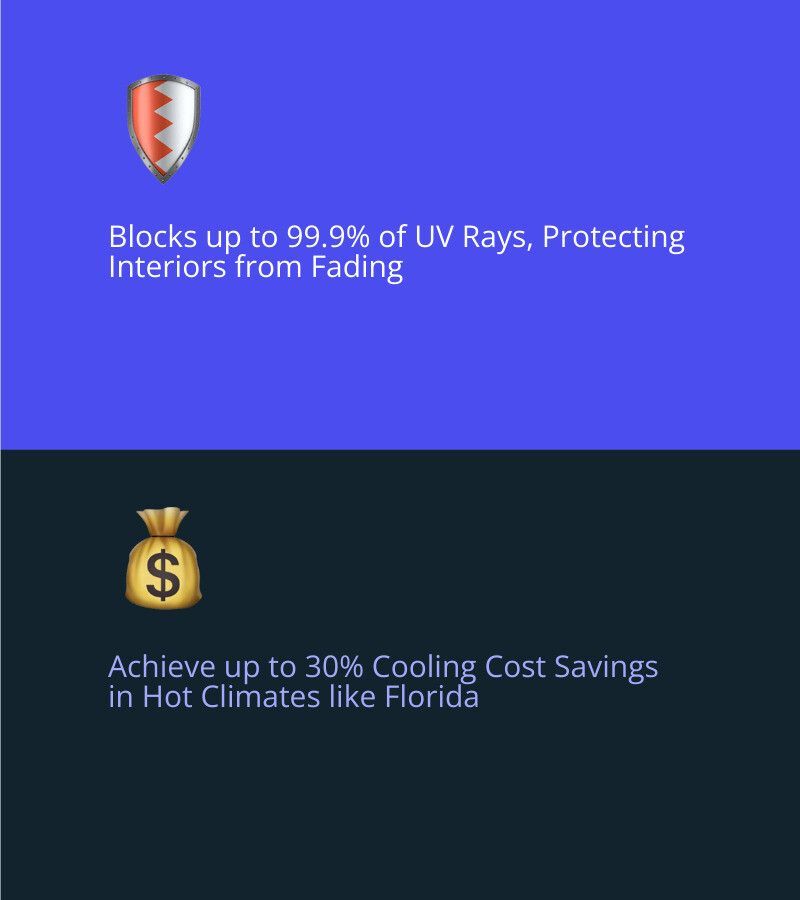
- UV Blocking – Filters out up to 99.9% of ultraviolet radiation that causes fading
- Heat Rejection – Reflects infrared energy before it enters your space, reducing cooling loads
- Light Control – Manages visible light transmission to reduce glare while maintaining views
- Multiple Layers – Combines adhesive, polyester film, metallic or ceramic coatings, and scratch-resistant top layers
Modern window films use advanced technologies like nano-ceramic particles and metalized coatings to achieve these results. The film doesn’t just darken your windows—it works like a sophisticated filter, letting desirable natural light through while blocking the heat and UV rays that drive up energy bills and damage interiors.
For Florida homeowners and businesses, this translates to real savings. By rejecting solar heat before it enters through your windows, quality film reduces the burden on your air conditioning system, cutting cooling costs by up to 30% during our long, hot summers.
I’m Chuck Cochran, and I’ve spent years helping homeowners and businesses in Northeast Florida understand how window film works to solve real problems like excessive heat, glaring screens, and fading furniture. Through North American Tint, we’ve installed thousands of square feet of film and seen how the right professional application transforms uncomfortable spaces into energy-efficient, protected environments.
How Window Film Works: A Deep Dive into Solar Control
At North American Tint, we often describe window film as “sunglasses for your home or business.” But it’s far more than just a tint. The science behind these seemingly simple sheets of material is quite sophisticated, involving principles of optics, thermodynamics, and material science. Every type of window film starts with a base material: Polyethylene Terephthalate (PET), a durable polyester film. This PET is then engineered with multiple layers, each contributing to the film’s overall performance.

These layers might include dyes for color, metals (like aluminum, silver, or titanium) for reflection, or advanced ceramic nanoparticles for selective filtration. An adhesive system bonds the film to the glass, and a tough, scratch-resistant coating protects the film’s surface. This layered construction is what allows window film to perform its impressive feats of solar energy management.
The primary scientific principles at play involve how the film interacts with the electromagnetic spectrum, particularly solar radiation. Window film manages solar energy through two main mechanisms:
- Reflection: Metallic or ceramic layers in the film literally bounce unwanted solar energy (heat and UV) away from your windows and back outside. This is a highly effective method for preventing heat gain.
- Absorption: Some films absorb solar energy, converting it into low-level heat within the film itself. This heat is then re-radiated, with a significant portion directed back outside, especially with modern technologies.
Our heat control window film uses these principles to drastically reduce the amount of heat entering your property, making your indoor spaces in St. Augustine, Jacksonville, or Palm Coast far more comfortable. Modern films also leverage nanotechnology, embedding microscopic particles that can selectively block specific wavelengths of light and heat without noticeably altering your view.
How Window Film Manages Solar Radiation
The sun’s energy reaches us in three main forms: ultraviolet (UV) radiation, visible light, and infrared (IR) radiation. Each has a different impact on our comfort and our belongings, and window film is designed to tackle them all.
- UV Radiation Blocking: This is perhaps one of the most critical functions of window film. UV radiation (both UVA and UVB) is largely responsible for fading furniture, flooring, artwork, and other interior furnishings. More importantly, excessive UV exposure poses health risks, including sunburn, premature aging, and increased skin cancer risk. Our films are incredibly effective, blocking up to 99.9% of harmful UV rays. This means your cherished possessions are protected, and your family or employees are safer from damaging radiation. For more information, explore our UV protection window film guide.
- Infrared (IR) Heat Rejection: Infrared light is what we primarily feel as heat. In Florida, mitigating IR heat is paramount to comfort and energy efficiency. Window films with specialized metallic or ceramic coatings excel at reflecting or absorbing this heat. For instance, some advanced films can reject up to 97% of solar infrared, significantly reducing the heat load on your air conditioning system. This is why our heat reflective film for windows is so popular in our sunny climate.
- Visible Light Transmission (VLT): This refers to the amount of visible light that passes through your windows. While we want to block heat and UV, we don’t necessarily want to live in the dark! Window film allows us to control the VLT. Films can be designed to let through 30% to 80% of visible light, offering a balance between brightness and glare reduction film. By reducing excessive brightness, window film makes it easier to work on computers or watch TV without squinting, creating a more comfortable environment.
Understanding Key Performance Metrics
When selecting window film, understand the technical specifications that quantify its performance. These metrics allow us to compare different films objectively and choose the best solution for your specific needs. The National Fenestration Rating Council (NFRC) is a non-profit organization that provides standardized ratings for window products, including film.
Here are the key parameters we consider:
- Total Solar Energy Rejected (TSER): This is a comprehensive measure of the total amount of solar energy (UV, visible light, and infrared) that is blocked by the window film. A higher TSER percentage indicates better overall solar heat rejection. A good-performing solar window film can reject up to 82% of solar energy compared to untreated glass.
- Solar Heat Gain Coefficient (SHGC): This measures how much solar radiation is admitted through a window, either directly transmitted or absorbed and then released inward. A lower SHGC means less solar heat gain, which is crucial for cooling-dominated climates like ours in Florida.
- Visible Light Transmittance (VLT): As discussed, this is the percentage of visible light that passes through the film. We help you choose a VLT that provides adequate light without excessive glare, balancing natural illumination with comfort.
- U-Value: While window film primarily addresses solar heat gain, some advanced Low-E (low-emissivity) films can also improve a window’s U-value, which measures how well a window prevents heat from escaping. A lower U-value indicates better insulating properties, helping to retain indoor warmth during cooler periods.
By understanding these NFRC-certified metrics, we can precisely match your property with the ideal film, ensuring maximum comfort and energy efficiency.
How Window Film Works to Boost Energy Efficiency
One of the most compelling reasons our clients in Amelia Island and Cumberland Island choose window film is its significant impact on energy efficiency. In Florida, where cooling costs can be substantial, window film offers a smart, cost-effective solution.
- Reduced HVAC Load: By reflecting and absorbing a large portion of solar heat, window film drastically reduces the amount of heat entering your property. This means your air conditioning system doesn’t have to work as hard, leading to a reduced HVAC load.
- Lowering Cooling Costs: Less work for your HVAC translates directly into lower energy consumption and significant savings on your utility bills. Our clients often report saving up to 30% on cooling expenses during the summer months. This makes window film an excellent investment for both residential and commercial energy efficiency.
- Carbon Footprint Reduction: Beyond the immediate financial benefits, reducing energy consumption also means a smaller environmental footprint. By making your home or business more energy-efficient, you’re contributing to a healthier planet.
- Contributions to Green Building Certifications: Window film can even help buildings achieve points in sustainability certification programs like ENERGY STAR and LEED (Leadership in Energy & Environmental Design). This demonstrates a commitment to sustainable practices and can improve a property’s value. According to the World Business Council for Sustainable Development (WBCSD), 40% of global energy is consumed by commercial buildings, with roughly one-third due to excess HVAC load from solar heat gain. High-efficiency films can reduce this by 50-75%.
For homeowners looking to maximize savings and comfort, our window tinting for home energy efficiency solutions are specifically designed for the Florida climate.
Types, Applications, and Professional Installation
Window film isn’t a one-size-fits-all product. Just as there are different needs for different properties, there are diverse types of films designed to meet those specific requirements. Whether for a busy commercial space in Jacksonville or a serene residential property in St. Augustine, we have a film solution.
Specialized Films for Every Need
At North American Tint, we offer a range of specialized films beyond just solar control, each with unique benefits:
- Security Window Film: These robust films are designed to hold shattered glass together upon impact, preventing dangerous flying shards. They strengthen glass by 2-3 times, making it more resistant to forced entry, accidents, or even severe weather. This added layer of protection is invaluable for both homes and businesses, providing peace of mind.
- Privacy Film: Ideal for ground-floor windows, conference rooms, or bathrooms, privacy films offer various levels of opacity. While transparent films primarily offer daytime privacy (when it’s brighter outside than in), decorative or frosted films can provide 24/7 privacy without blocking all natural light.
- Decorative Films: These films can transform the aesthetic of any glass surface. From frosted patterns to custom designs, decorative films offer an neat way to improve interiors, create branded spaces, or add a touch of artistic flair without the permanence or cost of etched glass.
- Anti-Graffiti Film for Businesses: For commercial properties, especially those with street-level glass, anti-graffiti film is a smart investment. This sacrificial layer protects glass from etching, scratches, and spray paint. If vandalized, the film can be easily removed and replaced at a fraction of the cost of replacing the entire glass pane. We specialize in these commercial applications, helping businesses maintain a pristine appearance.
- Bird Safe Window Film Complete Guide: In our beautiful Florida environment, bird collisions with glass are a significant concern. We offer films with subtle patterns or visual markers that are visible to birds but largely transparent to humans, helping to prevent tragic bird strikes while preserving your view.
Whether you’re looking for window film for homes or a commercial office window film solution, we have the expertise to guide you.
Comparing Film to Other Window Solutions
When considering ways to improve your windows, you might weigh several options. Here’s how window film stacks up:
- Window Film vs. Window Replacement: Replacing windows can be an expensive and disruptive undertaking. Window film offers a significantly more cost-effective and less invasive alternative. It can achieve many of the same benefits—heat reduction, UV protection, glare control—at a fraction of the cost and time. While replacement windows may offer some thermal benefits, film specifically targets solar heat gain, which is often the primary concern in Florida.
- Blinds and Shades: While blinds and shades offer privacy and some light control, their energy efficiency can be inconsistent. They block views when closed, and when open, they offer no protection from heat or UV. Window film works continuously, allowing you to maintain your view while still benefiting from solar control and UV protection.
- Longevity and Durability: Quality window films are designed to last. Most solar films generally last several years without fading, and warranties for residential applications often extend for a lifetime, with commercial installations typically covered for 15 years. Factors like exposure to direct sunlight (especially in sunny locations like St. Augustine) can influence longevity, but professional-grade films are built to endure.
The Importance of Professional Installation
While some smaller, simpler films can be tempting DIY projects, for optimal performance and longevity, professional installation is crucial. At North American Tint, our expertise ensures a flawless application that maximizes the film’s benefits and preserves your warranty.
- Flawless Application: Installing window film requires precision, specialized tools, and a dust-free environment. Our trained technicians carefully prepare your windows, apply the film smoothly, and carefully trim it for a seamless finish. This avoids common DIY pitfalls like bubbles, creases, or misalignment that can compromise both aesthetics and performance.
- Avoiding Bubbles and Peeling: The installation process involves water and a soap solution. After application, a curing process begins, during which any remaining moisture beneath the film evaporates. This can take anywhere from 30 to 60 days, and it’s normal to see small water bubbles during this time. Our professionals understand this process and advise you on proper post-installation care to ensure a perfect, long-lasting bond.
- Warranties: Professional installation is often a requirement for maintaining the manufacturer’s warranty. Our team handles the application according to strict guidelines, ensuring your investment is protected. We stand behind our work and the quality of the films we install.
- Expert Advice: We help you select the precise film for your specific needs, considering your window types, orientation, and desired outcomes. Our home window film installation services ensure that every detail is handled with care.
Choosing North American Tint means choosing peace of mind. We bring advanced technology and expert craftsmanship to your residential or commercial property, changing your windows into smarter, more efficient elements of your space.
Learn about our residential film benefits and types