Beat the Heat with Window Films—Myth or Miracle?
Why Understanding Window Film Heat Control Effectiveness Matters
How effective are window films to control heat is a question every homeowner faces when summer energy bills spike and rooms become uncomfortably hot. The simple answer: very effective when properly installed.
Quick Effectiveness Overview:
- Heat Rejection : Up to 84% of solar heat blocked
- UV Protection : 99% of harmful UV rays filtered
- Energy Savings : 30-40% reduction in cooling costs
- Temperature Drop : Up to 7°F cooler indoor temperatures
- Payback Period : Typically 3 years or less
With 30% of all energy used to heat and cool homes escaping through windows, untreated glass becomes your biggest comfort enemy during hot months. Modern window films work by reflecting infrared radiation – the invisible heat portion of sunlight – before it enters your home.
The effectiveness depends on three key factors:
- Film type – Ceramic and spectrally selective films outperform basic tinted options
- Professional installation – Proper application ensures maximum performance
- Window orientation – South and west-facing windows see the biggest impact
As Ian Noyes, who heads North American Tint serving SE Georgia and NE Florida, I’ve helped hundreds of homeowners understand exactly how effective are window films to control heat through our 3M and Solar Gard approved installations. My team’s experience shows that quality films with professional application consistently deliver the comfort and energy savings homeowners expect.
How Window Films Control Heat
Understanding how effective are window films to control heat starts with grasping the science behind them. Think of quality window film as a microscopic bouncer at your window – it knows exactly what to let in and what to keep out.
The magic happens through spectral selectivity . This means the film acts like a smart filter, welcoming beneficial natural light while firmly rejecting unwanted heat. It’s the same principle as sunglasses for your home, but far more sophisticated.
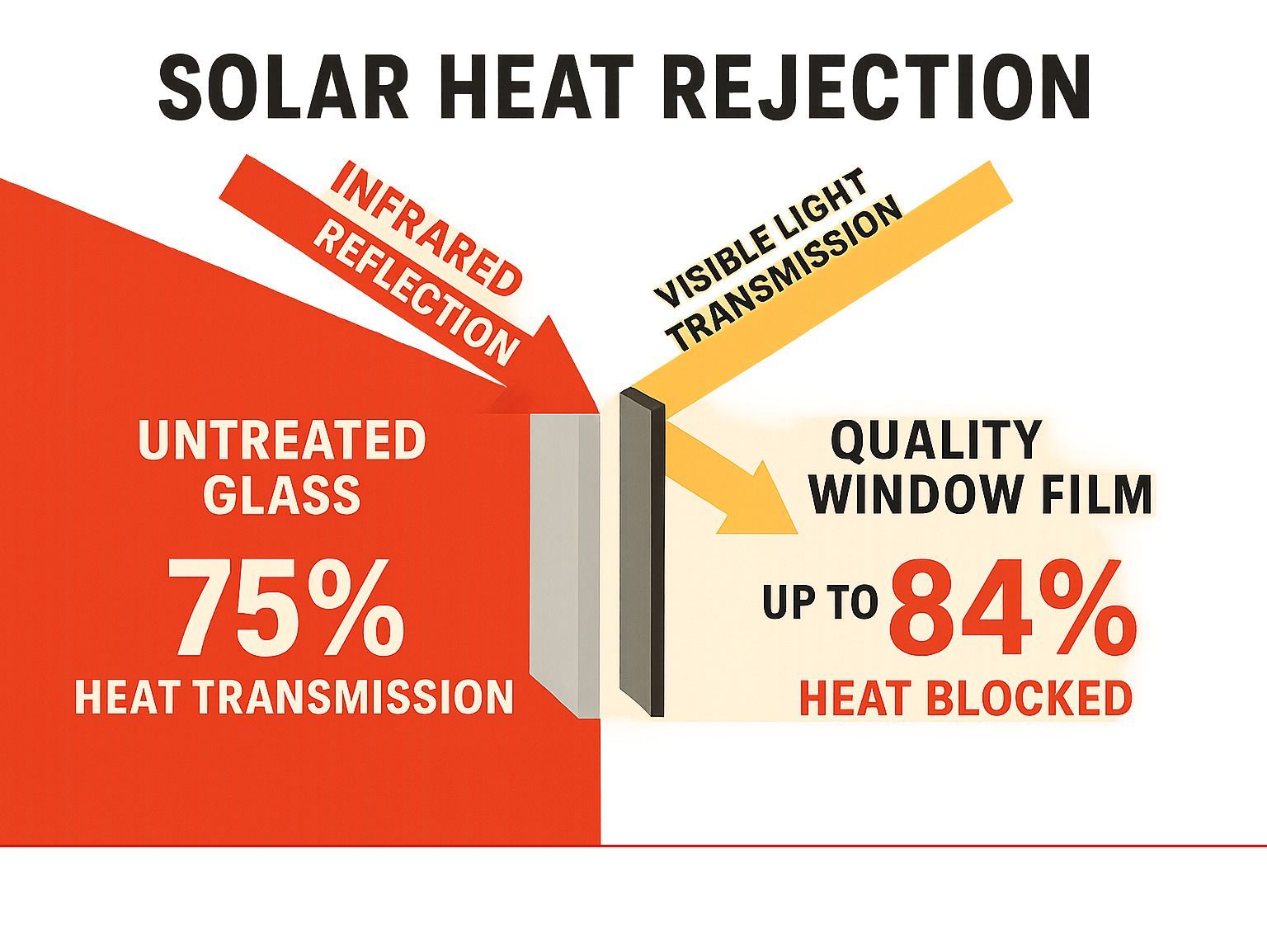
Infrared reflection does the heavy lifting here. The film’s specialized coatings bounce heat energy back outside before it can warm your rooms. Meanwhile, visible light transmission ensures your home stays bright and welcoming. This selective approach explains why professionally installed films can block up to 84% of solar heat while maintaining crystal-clear views.
Modern films also incorporate low-E coatings – microscopically thin layers that work year-round. During summer, they reflect heat outward. In winter, they help retain your home’s warmth by reflecting radiant heat back inside.
| Film Type | Heat Rejection | Light Transmission | Best For |
|---|---|---|---|
| Clear Glass | 12% | 90% | Baseline comparison |
| Reflective Film | 78% | 15% | Maximum heat control |
| Ceramic Film | 84% | 70% | Balanced performance |
The Solar Spectrum and Your Windows
Sunlight hitting your windows carries three distinct types of energy, each affecting your comfort differently.
Visible light makes up about 40% of solar energy – this is what brightens your rooms and connects you to the outdoors. You definitely want to keep most of this.
Infrared radiation accounts for roughly 53% of solar energy and delivers pure heat. This invisible energy passes right through untreated glass, warming everything it touches inside your home. It’s the main culprit behind those sweltering afternoon rooms.
Ultraviolet light represents the remaining 7% but packs a punch for furniture fading and potential skin damage. Quality films block 99% of these harmful UV rays.
Here’s the problem: regular glass welcomes all three types equally. Your windows become heat funnels, allowing up to 83% of total solar energy to flood inside.
Heat-Blocking Science in One Sheet
The real wonder happens within micron-thin layers – each one engineered for a specific job. These aren’t random coatings slapped together, but precisely crafted barriers that work in harmony.
Metal oxides form the backbone of advanced films we install. These microscopic particles create an invisible shield that reflects infrared heat while staying optically clear. Think of them as millions of tiny mirrors, each one perfectly angled to bounce heat back outside.
The most sophisticated films use ceramic nanoparticles combined with precious metal elements. This combination creates what we call a “smart barrier” – it actually distinguishes between the light you want and the heat you don’t want.
When we install these advanced coatings on your windows, each layer contributes to the overall performance. One layer might focus on UV protection, another on infrared reflection, and a third on durability. Together, they create a comprehensive heat-control system that explains how effective are window films to control heat in real-world conditions.
How Effective Are Window Films to Control Heat? The Numbers
When homeowners ask how effective are window films to control heat , the actual performance data tells an impressive story. After thousands of installations, we’ve consistently measured results that exceed most people’s expectations.
The best heat-blocking films we install reject up to 84% of solar energy before it enters your home. That’s not marketing fluff – it’s measurable performance verified by NFRC testing standards. To put this in perspective, untreated glass typically allows 75-80% of solar heat to pass through, while quality films flip those numbers completely.
Temperature drops are equally dramatic. We’ve measured interior spaces cooling by 7-15°F during peak sun hours after film installation. One recent client in a sun-drenched home saw their living room temperature drop from a sweltering 89°F to a comfortable 76°F on the same afternoon we finished the installation.
The scientific research on window film energy savings backs up what we see in real homes. Professional-grade films consistently deliver 99% UV protection – more effective than SPF 1000+ sunscreen for your furniture and family.
Different film technologies offer varying performance levels. Ceramic films excel at infrared rejection with up to 80% heat blocking while maintaining crystal-clear visibility. Spectrally selective films balance heat rejection with maximum natural light transmission. Dual-reflective options can block up to 84% of total solar energy when maximum heat control is needed.
How effective are window films to control heat in sunny climates?
Living in hot, humid climates makes window films particularly effective for heat control . The intense sun exposure and year-round cooling demands create perfect conditions for dramatic energy savings.
Our installations consistently reduce air conditioning runtime by 30-40% during peak summer months. That translates to real comfort improvements beyond just lower energy bills. Hot spots near large windows disappear. Rooms maintain consistent temperatures instead of becoming unbearable during afternoon sun exposure.
One memorable installation involved a master bedroom that became unusable from 2-6 PM daily due to western sun exposure. After installing ceramic film, the temperature difference was so dramatic they could comfortably use the room all day.
Large windows show the biggest improvements because they’re often the primary heat contributors in sunny climates.
How effective are window films to control heat during winter months?
The effectiveness of quality window films extends far beyond summer cooling. Low-emissivity properties built into modern films provide significant winter insulation benefits that many homeowners don’t expect.
During cold months, filmed windows reduce heat loss by 30-50% compared to untreated glass. The same microscopic layers that reflect summer heat also bounce your home’s radiant heat back inside where it belongs. This eliminates those uncomfortable cold zones near windows that make rooms feel drafty even with adequate heating.
We’ve measured interior glass surface temperatures staying 8-12°F warmer on filmed windows during winter cold snaps. This means more consistent indoor temperatures and improved comfort throughout your home.
Types of Residential Heat-Control Films
Choosing the right window film makes all the difference in how effective are window films to control heat in your specific home. After installing hundreds of different film types, I can tell you that not all films are created equal – and the wrong choice can leave you disappointed with the results.
Reflective films deliver the strongest heat rejection numbers, blocking up to 82% of solar energy. Think of them as mirrors that bounce heat right back outside. The trade-off? Your windows will have that distinctive mirrored look during the day. Many homeowners love this for privacy, but it’s not everyone’s style preference.
Dual-reflective films give you the best of both worlds – maximum heat control with a more subtle appearance. These clever films use different coatings on each side, so they look nearly clear from inside while still reflecting heat from outside. They can block up to 84% of solar energy, making them our top choice for homeowners who want performance without the mirror effect.
Spectrally selective films are the smart choice for those who want to keep their rooms bright. These advanced films specifically target heat-carrying infrared light while letting beneficial visible light pass through. You get up to 78% heat reduction without making your home feel darker or losing that natural sunlight you love.
Ceramic films represent the newest technology we install. Using microscopic ceramic nanoparticles instead of metals, these films block up to 80% of infrared heat while maintaining crystal-clear views. They’re particularly popular with homeowners who want maximum performance with zero interference to cell phones or electronics.
The quality of the ceramic and metal oxide coatings we use through our solar film benefits program makes a huge difference in long-term performance. Cheaper films might start strong but lose effectiveness over time as their coatings break down.
Picking the Right Film for Your Home’s Orientation
Your home’s layout tells us exactly which film will work best. We’ve learned that south-facing windows need films that balance heat control with brightness since they get steady sun all day. Ceramic films work beautifully here – they keep the heat out without making your living room feel like a cave.
West-facing windows are the real troublemakers. That late afternoon sun can turn a room into an oven by 3 PM. These windows often need our strongest dual-reflective films to handle the intense heat load during the hottest part of the day.
East-facing windows catch gentler morning sun, so they typically do well with moderate heat control films that still let in plenty of pleasant morning light. North-facing windows rarely need heavy-duty heat control but still benefit from UV protection and winter insulation properties.
Extra Perks You Didn’t Expect
The heat control is just the beginning. Quality window films deliver surprises that often matter more to homeowners than the energy savings.
Fade protection saves furniture, carpets, and artwork from UV damage. I’ve had clients find their hardwood floors have different colors when they move furniture – the filmed areas stayed rich and vibrant while unprotected spots faded to pale shadows.
Glare reduction transforms rooms that were unusable during certain hours. One client’s home office became comfortable for computer work again after eliminating the screen glare that made afternoons impossible for productivity.
Added safety from films holding glass together during accidents or storms provides peace of mind, especially for families with children. While not their main purpose, heat control films still keep dangerous glass shards contained if windows break.
Beyond Summer: Year-Round Comfort & Savings
While most homeowners initially wonder how effective are window films to control heat during scorching summer months, the real value emerges through year-round performance. Quality films work continuously, delivering comfort and savings through every season.
Your HVAC system experiences the most dramatic relief. When window films block 78-84% of solar heat gain, your air conditioning doesn’t work nearly as hard to maintain comfortable temperatures. Systems run shorter cycles, maintain steadier temperatures throughout your home, and simply last longer.
Winter insulation benefits often surprise homeowners. The same films that reject summer heat also reflect your home’s warmth back inside during colder months. Those uncomfortable cold spots near windows disappear, and heating costs drop as less energy escapes through glass.
Many energy providers recognize window films as legitimate efficiency improvements. Scientific research on utility rebates shows these programs increasingly offer incentives for professional film installations, helping offset initial costs.
Occupant comfort extends beyond simple temperature control. Filmed windows eliminate those blazing hot zones that make certain rooms unusable during afternoon hours. Glare disappears, making TV viewing pleasant and computer work comfortable regardless of sun angles.
Proof in Energy Bills
The 30-40% cooling cost reductions we discuss aren’t marketing promises – they show up as real dollars in monthly utility bills. Our clients consistently report dramatic savings that begin immediately after installation.
Temperature differences become noticeable within hours of professional installation. Peak afternoon temperatures that once made rooms unbearable drop to comfortable levels without cranking up the air conditioning.
Monthly savings typically range from 25-35% during cooling season. For homes spending $200 monthly on air conditioning, that translates to $50-70 in monthly savings. These aren’t temporary reductions – the savings continue month after month, year after year.
Payback periods consistently fall under 3 years for quality film installations. After that initial payback, every dollar saved goes straight to your pocket for the film’s entire 20-25 year lifespan.
Sustainable Living, One Pane at a Time
Window films contribute meaningfully to environmental sustainability through reduced energy consumption. When your home needs less cooling, power plants burn less fuel, and carbon emissions decrease.
Carbon footprint reduction happens faster than most people expect. The manufacturing energy required to produce quality films typically gets offset within 6 months through the energy savings they create.
Federal tax incentives through the Inflation Reduction Act now provide credits for energy efficiency improvements. While specific qualifications vary, window films often qualify as part of broader home efficiency upgrades.
Long-term environmental impact multiplies over decades. Films lasting 20-25 years provide continuous energy savings throughout their entire lifespan, making them one of the most environmentally beneficial improvements you can make to your home.
Installation, Durability & Maintenance
Getting those impressive heat control numbers we’ve been talking about depends entirely on proper installation. I’ve seen beautiful, expensive films perform poorly because they weren’t installed correctly – and I’ve watched homeowners get frustrated when their investment doesn’t deliver the comfort they expected.
Professional installation isn’t just about avoiding bubbles (though nobody wants those). It’s about achieving the heat control effectiveness that makes window films worth the investment in the first place.
When our certified technicians arrive at your home, they start with meticulous surface preparation . Every speck of dust, soap residue, or fingerprint gets removed because contaminants create weak spots that lead to early failure. The difference between a 3-year DIY job and a 25-year professional installation often comes down to this crucial first step.
Precise cutting happens next, with films measured and trimmed to exact specifications. We leave proper edge clearances that prevent stress points while ensuring complete coverage. This isn’t guesswork – it’s following manufacturer specifications that preserve both performance and warranty coverage.
The actual application requires controlled conditions and steady hands. Temperature, humidity, and dust levels all affect how well films bond to glass. Our installation process follows strict protocols that ensure you get the full heat rejection performance the films are designed to deliver.
Every installation gets a thorough quality inspection before we consider the job complete. We check for any imperfections that could reduce performance or create failure points down the road. This attention to detail is why our residential window film installations consistently deliver the energy savings and comfort improvements homeowners expect.
Warranty protection comes standard with professional installation. The comprehensive coverage includes both materials and workmanship, giving you peace of mind for decades. More importantly, proper installation preserves the manufacturer warranties that void with DIY attempts.
Quality films professionally installed will serve your home for 20-25 years with minimal maintenance. That longevity is essential for achieving the payback periods and long-term energy savings that make window films such a smart investment.
Why DIY Kits Fall Short
I get it – DIY window film kits look tempting when you’re trying to save money. But here’s what I’ve learned after fixing hundreds of failed DIY installations: they rarely achieve the heat control effectiveness that makes the whole project worthwhile.
Bubbles and wrinkles are the obvious problems everyone notices, but they’re actually the least of your worries. These application defects create weak points that lead to edge lifting and eventual failure. More importantly, they disrupt the film’s ability to reflect heat effectively.
Warranty issues catch most DIY enthusiasts by surprise. Film manufacturers void their warranties on self-installed products, leaving you without protection when problems develop.
The biggest problem is reduced performance . Improper installation can cut heat rejection by 20-30%, which means you won’t get the energy savings or comfort improvements you’re expecting.
Longevity problems make DIY installations expensive in the long run. While professional installations last 20-25 years, DIY jobs typically need replacement in 3-5 years.
Caring for Your Newly Filmed Windows
Taking care of your professionally installed films is surprisingly simple, but there are a few important guidelines that preserve their heat control effectiveness for decades.
Cure time is crucial for achieving maximum performance. Films need 30-60 days to fully bond with the glass and reach their rated heat rejection levels. During this period, be gentle with window operation and avoid cleaning altogether.
Gentle cleaning keeps films looking great and performing well. Use soft cloths and mild soap solutions – the same approach you’d use on eyeglasses. Avoid paper towels, squeegees, or anything abrasive that could scratch the surface.
Regular inspection helps catch small problems before they become big ones. Check periodically for any edge lifting or surface damage, especially after storms or extreme weather.
The beauty of quality films with professional installation is how little maintenance they actually need. Follow these simple guidelines, and your films will deliver consistent heat control and energy savings for decades to come.
Frequently Asked Questions about Heat-Control Window Film
Does window film make rooms too dark?
This is probably the most common concern we hear, and I completely understand why. Nobody wants to turn their bright, cheerful home into a cave just to stay cool.
The good news is that modern heat control films are designed to be incredibly smart about what they block . Today’s spectrally selective and ceramic films can block up to 80% of heat-producing infrared radiation while still allowing 50-70% of visible light to pass through. It’s like having sunglasses for your house that only filter out the parts you don’t want.
We work with each client to choose films with the right Visible Light Transmission (VLT) rating for their specific needs. Living rooms and kitchens typically get films with higher VLT ratings (60-70%) to maintain that bright, welcoming feel. Bedrooms might use films with moderate VLT ratings (40-50%) since many people actually prefer a slightly dimmer environment for better sleep.
The key is understanding that how effective are window films to control heat doesn’t depend on making rooms dark – it depends on targeting the right part of the solar spectrum.
Will film void my existing window warranty?
Window warranties can be tricky territory, and this is definitely something worth discussing before installation. The answer depends on your specific window manufacturer and the type of film we’re considering for your home.
Many window manufacturers actually accept professionally installed films, particularly when they’re applied to the interior glass surface. The key word here is professionally – manufacturers are understandably concerned about improper installation that could damage their products.
Before we start any installation, we always check your existing warranty terms and can recommend films that won’t affect your coverage. This is especially important with double-pane windows, where thermal stress is a consideration.
The manufacturers we work with provide their own warranties that specifically cover their films on insulated glass units. So you’re not trading one warranty for uncertainty – you’re getting protection that’s designed to work together.
How soon will I feel the temperature difference?
Here’s where things get exciting – you’ll notice the difference almost immediately after we finish installation. Walk into a filmed room during peak afternoon sun, and the temperature difference is obvious right away.
However, films do reach their full effectiveness after the 30-60 day cure period as the adhesive fully bonds to the glass. Most of our clients report significant comfort improvements within the first week, with maximum heat control benefits developing over the first month.
The most dramatic differences happen during peak sun hours – typically between 1 PM and 5 PM when solar heat gain is at its worst. Those are the times when filmed windows really show how effective are window films to control heat . You’ll still notice differences in the morning and evening, but they’re less pronounced since the sun isn’t as intense.
One thing that always makes me smile is getting calls from clients on the first hot afternoon after installation. They’re genuinely surprised at how much more comfortable their previously unbearable rooms have become.
Conclusion
How effective are window films to control heat? After examining the science, the numbers, and real-world results, the answer is remarkably clear: quality window films are exceptionally effective when professionally installed.
The evidence speaks for itself. Films consistently block 78-84% of solar heat while preserving the natural light that makes your home feel bright and welcoming. That’s not marketing hype – it’s measurable performance that shows up immediately in your comfort and eventually in your energy bills.
What makes this effectiveness possible is the advanced technology in today’s ceramic and spectrally selective films. These aren’t the basic tinted films of decades past. Modern films use microscopic layers of metal oxides and ceramic nanoparticles that literally know the difference between light you want and heat you don’t.
The 30-40% reduction in cooling costs our clients experience isn’t a best-case scenario – it’s typical performance across different home types and orientations. When you combine immediate comfort improvement with energy savings that last 20-25 years , window films become one of the smartest investments you can make in your home.
At North American Tint, we’ve transformed countless homes across Southeast Georgia and Northeast Florida from uncomfortable, energy-wasting spaces into comfortable, efficient havens. The difference isn’t just in the advanced 3M and Solar Gard films we install – it’s in the professional application that ensures you get every bit of performance these remarkable products can deliver.
The science is solid, the technology is proven, and the results are consistent. How effective are window films to control heat? Effective enough to make your home more comfortable while saving money every month for decades to come.
Ready to experience this effectiveness firsthand? Our 3M window film services combine cutting-edge film technology with the professional installation expertise needed to deliver maximum heat control performance. Your more comfortable, energy-efficient home is just a phone call away.