

Why Understanding Window Film Investment Matters
For Florida homeowners tired of high energy bills and fading furniture, the residential window film cost is a key factor when considering this valuable upgrade. The final investment depends on several factors, including the type of film, the size and number of windows, and installation complexity.
The truth is, the scope of a window film project varies significantly based on your specific needs and the quality of materials you choose. Understanding these factors helps you make a smart decision that fits your budget while delivering real, measurable benefits.
I’m Ian Noyes, and I head North American Tint, where we work directly with homeowners throughout SE Georgia and NE Florida to determine the best window film solutions for their unique situations. As a 3M and Solar Gard Approved Dealer, I’ve helped hundreds of homeowners understand exactly what they’re paying for—and why professional installation makes all the difference in both performance and longevity.
Basic Residential window film cost glossary:
- window tinting st augustine
- window tint st augustine fl
Why Homeowners are Investing in Window Film
Homeowners across our service areas, from St. Augustine to Amelia Island, are increasingly turning to residential window film as a smart home improvement. This isn’t just a trend; it’s a practical response to common challenges like soaring energy bills, uncomfortable indoor temperatures, and the relentless sun fading cherished belongings. Window film offers a versatile solution that addresses these concerns head-on.
One of the primary drivers for this investment is energy efficiency. Our Florida climate means air conditioning units work overtime for much of the year. Window film is an excellent way to combat heat gain, blocking a significant portion of solar heat before it ever enters your home. This reduces the strain on your HVAC system, leading to noticeable savings on your cooling costs. The International Window Film Association (IWFA) highlights how window film can significantly improve insulation, helping to stabilize indoor temperatures and maintain a more comfortable living environment year-round.
Beyond energy savings, homeowners value the protection window film offers. Sunlight, while beautiful, is also a source of harmful ultraviolet (UV) rays. These UV rays are a leading cause of fading and deterioration in carpets, hardwood floors, curtains, and upholstery. High-quality window films are designed to block up to 99% of harmful ultraviolet (UV) rays, preserving the color and integrity of your interior furnishings for years to come. This also contributes to protecting your family’s skin from UV exposure indoors.
Glare reduction is another significant benefit. Imagine watching your favorite show or working on your computer without constantly battling harsh reflections or squinting. Window film can cut down on irritating glare, improving visual comfort and productivity in your living spaces. This Old House notes that window film has “terrific benefits for the comfort of your home: solar control, privacy, UV protection, fade control, glare reduction, and energy efficiency.”
For many, residential window film is a practical and cost-effective alternative to full window replacement. As Total Protection Films founder Chris Fill aptly puts it, window replacement can be a major expense. If your existing windows are structurally sound but simply aren’t performing as well as you’d like in terms of heat rejection or UV protection, window film offers a perfect middle ground, enhancing performance at a fraction of the cost. You can learn more about the diverse advantages these films offer for your home by visiting our More info about residential window film.
A Deep Dive into Window Film Investment Factors
Understanding the residential window film cost involves looking beyond a simple price tag. It’s a combination of the materials chosen, the complexity of the job, and the expertise of the installers. Let’s explore the factors that contribute to the final investment.
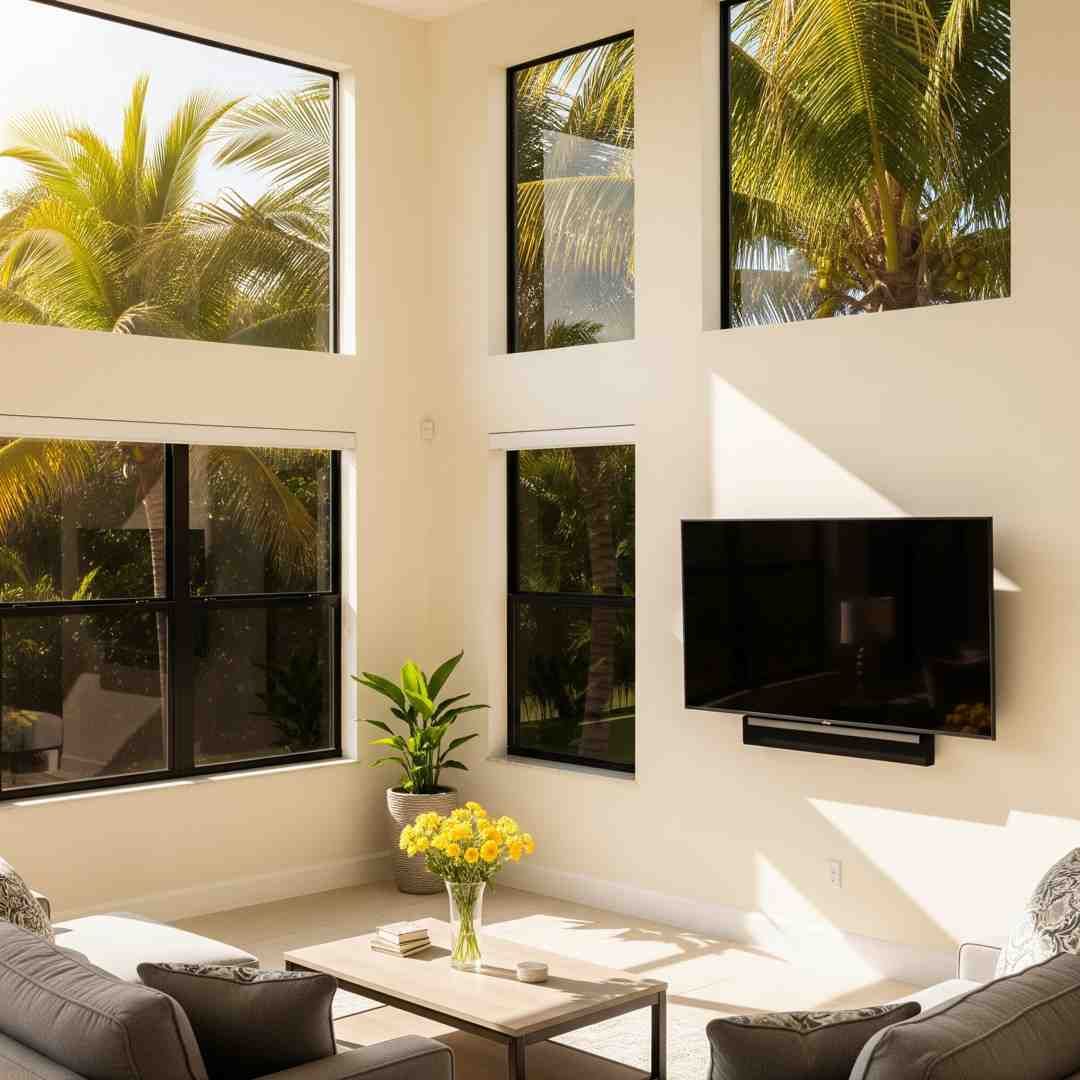
The primary drivers are the square footage of glass, the type and quality of the film, and the labor involved. Our goal is always to provide a transparent breakdown, ensuring you understand where your investment goes. For a more comprehensive look at these elements, explore our More info about home window tinting cost factors.
How Film Type Influences Your Investment
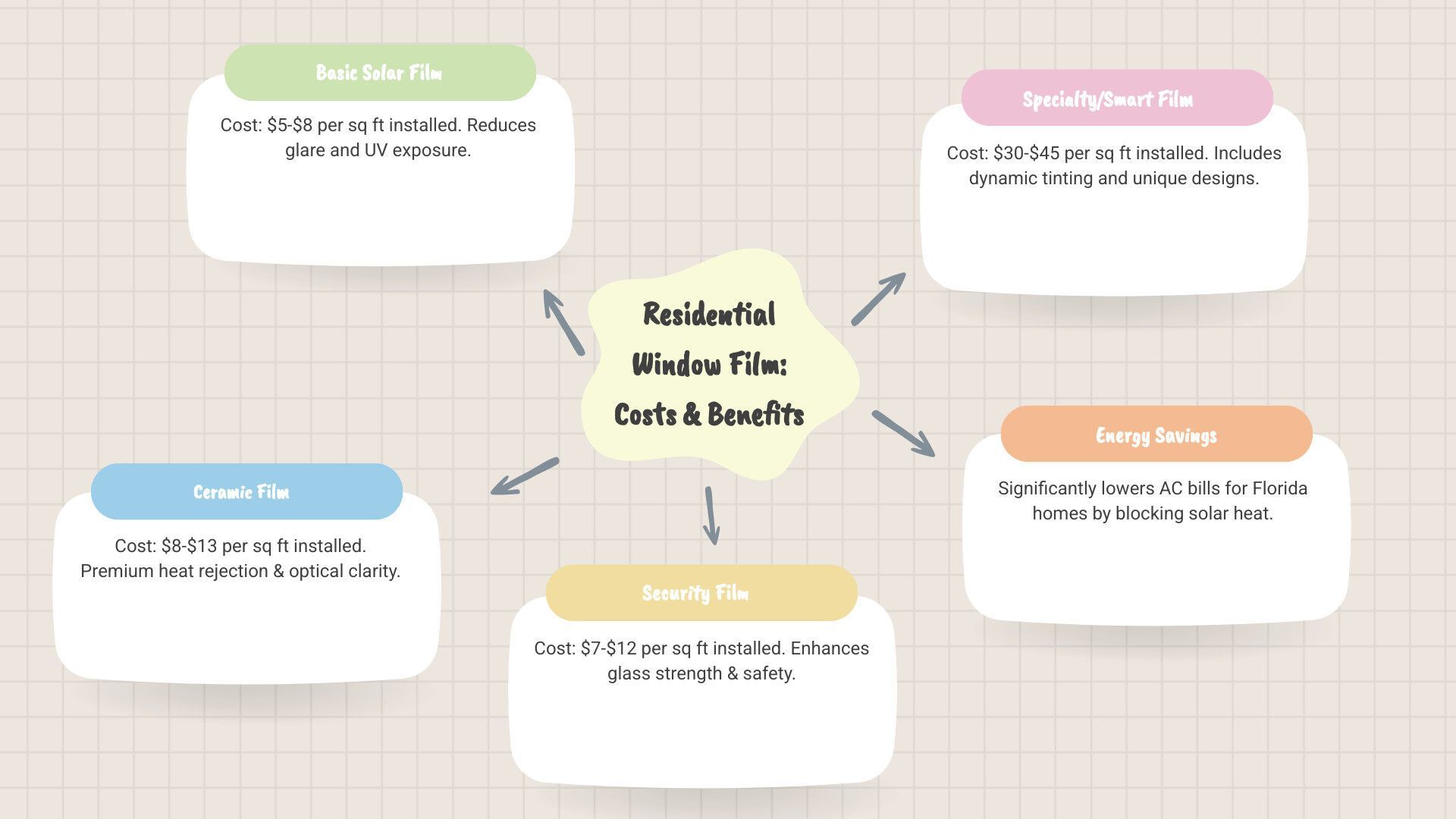
The type of residential window film you select is the most significant factor influencing the overall investment. Each film type offers different benefits and comes with a corresponding investment level.
| Film Type | Relative Investment Level | Lifespan (Years) | Key Benefits |
|---|---|---|---|
| Dyed Window Film | Lower | 3-7 | Basic privacy, glare reduction, some UV protection, economical |
| Metalized Film | Mid-Range | 7-12 | Good heat rejection, glare reduction, UV protection, reflective appearance |
| Ceramic Film | Higher | 10-15+ | Superior heat rejection, high clarity, no signal interference, excellent UV protection, durable |
| Security Film | Mid to High | 10-15+ | Shatter resistance, increased safety, UV protection |
| Decorative Film | Mid-Range | 7-10 | Aesthetic improvement, privacy, glare reduction |
| Smart/Switchable | Premium | 3-5+ | On-demand privacy, instant light control |
- Dyed Window Film : An economical choice for basic privacy and glare reduction, but with a shorter lifespan and less heat control.
- Metalized Window Film : A step up, reflecting solar energy for good heat rejection. Can sometimes interfere with electronic signals.
- Ceramic Window Film : A premium, durable option using nano-ceramic particles for superior heat rejection and clarity without signal interference.
- Security Window Film : Designed to hold shattered glass together, improving safety. Often includes solar control properties.
- Decorative Window Film : Chosen for aesthetics and privacy, mimicking etched, frosted, or patterned glass.
- Smart or Switchable Films : A high-end choice that changes from transparent to opaque on demand for instant privacy.
When considering solar benefits, our More info about solar film dives deeper into how these films can transform your home’s comfort. For those seeking improved privacy without sacrificing natural light, our More info about privacy film offers detailed insights into your options.
Key Factors Affecting Your Total Investment
Beyond the film type, several practical elements influence the overall residential window film cost . These factors primarily revolve around the labor required for a successful installation.
- Window Size and Number : The total square footage of glass to cover is a primary factor. Larger projects require more material, though economies of scale can sometimes apply.
- Installation Complexity and Accessibility : Custom-shaped windows (arches, circles), those with small panes (French doors), and hard-to-reach windows (skylights, high-story windows) require more intricate labor and specialized equipment, influencing the project’s scope.
Understanding these variables helps us provide you with the most accurate estimate for your project. For further details on how these elements impact pricing, explore our More info about residential tinting cost.
Professional Installation vs. DIY: Understanding the True Value
When considering residential window film cost , some homeowners weigh the DIY route against professional installation. While DIY kits may seem appealing, they come with significant risks. Common issues like bubbles, creases, and peeling edges result from inexperience, leading to a poor appearance, reduced performance, and wasted material.
Professional installation ensures a flawless, bubble-free application that maximizes the film’s performance and lifespan. It also comes with a comprehensive manufacturer and installer warranty, which is often voided by DIY attempts. Choosing a professional is an investment in expertise, peace of mind, and long-term durability.
By choosing professional application, you’re investing in a quality result that lasts. To see how our meticulous process ensures these benefits, visit our page on More info about home window film installation.
Additional Project Considerations
Beyond the basic film and installation, a few additional factors might influence your overall residential window film cost .
- Removal of Old Film : If your windows have old, degraded film, it will need to be removed before new film can be applied. This labor-intensive process adds to the project’s scope.
- Specialized Equipment : High or hard-to-reach windows may require scaffolding or lifts, which will be factored into the installation plan.
- Custom Designs : While standard decorative films are available, intricate custom patterns or graphics involve additional design and cutting work.
- Anti-Graffiti Film for Commercial and Business Properties : Primarily for commercial properties, this specialized film protects glass from vandalism, allowing for easy replacement of the film rather than the entire glass panel.
- HOA and Local Codes : It’s wise to check with your local homeowners’ association (HOA) or city building codes, as some communities may have rules regarding exterior-facing films.
Calculating the Long-Term Value and ROI of Window Film
While the initial residential window film cost is an important consideration, it’s equally vital to look at the long-term value and return on investment (ROI). Window film isn’t just an expense; it’s an upgrade that can pay for itself over time through tangible savings and improved comfort.
One of the most compelling aspects of window film is its ability to protect your home’s assets. The sun’s UV rays are notorious for causing fading and discoloration in furniture, flooring, and artwork. By blocking nearly all harmful UV rays, window film acts as an invisible shield, significantly extending the life of your belongings. This protection means less money spent on replacing or refinishing faded items.
Beyond asset protection, window film can also improve your home’s value. A more energy-efficient home is more attractive to potential buyers, especially in our warm Florida climate. The added benefits of UV protection, glare reduction, and increased privacy also contribute to a higher perceived value. For more information on the broad spectrum of advantages, visit our page on More info about the benefits of window film.
The Payback: Energy Savings and UV Protection
The financial and protective benefits of residential window film are profound, especially in Florida and Southeast Georgia. The “payback” from your residential window film cost comes primarily through significant energy savings and unparalleled UV protection.
Lowering AC bills is a major benefit for homeowners in areas like St. Mary’s, GA, and Jacksonville. Quality solar control films can lead to a significant reduction in cooling costs. This substantial decrease in heat gain reduces the workload on your air conditioning unit, lowering energy consumption and potentially extending the lifespan of your HVAC system. The International Window Film Association (IWFA) emphasizes that Window film can improve insulation and help stabilize indoor temperatures.
In addition to keeping your home cooler, window film acts as a powerful barrier against the sun’s damaging ultraviolet rays. High-quality window films block up to 99% of harmful ultraviolet (UV) rays, effectively preventing the premature aging of your interiors. This means your furniture and flooring retain their vibrancy for much longer. These combined benefits mean that your initial investment can pay for itself over time through energy savings, making it a wise financial decision.
Making a Smart Investment for Your Home
Choosing to install residential window film is a decision that impacts your home’s comfort and efficiency for years to come. Making a smart investment means understanding the full picture, from initial residential window film cost to long-term value.
Professionally installed window film is impressively durable, often lasting for many years depending on the film type and conditions. This longevity contributes significantly to its cost-effectiveness over time. Determining the right film for your home involves considering your local climate, privacy needs, and budget. We work with homeowners in areas like Amelia Island and Palm Coast to recommend films that offer the best balance of performance and value.
We pride ourselves on providing custom solutions and expert installation. If you’re ready to explore how window film can benefit your home and discuss your specific project, we invite you to connect with us. We serve customers throughout the St. Augustine area and are always happy to provide personalized guidance. Request your free estimate today and let us help you make a smart investment in your home’s future.